
Tony Campbell added a new photo to the album: Bible Studies.
Bible StudiesTHE 400 “NOT-SO-SILENT” YEARS, AND HOW EZEKIEL SET THE STAGE: People call the period between Malachi and Matthew the “400 silent years.” But history was not silent. Empires were rising.
Bible StudiesTHE 400 “NOT-SO-SILENT” YEARS, AND HOW EZEKIEL SET THE STAGE:
People call the period between Malachi and Matthew the “400 silent years.” But history was not silent. Empires were rising. Nations were shifting. Israel was under foreign rule. The silence was prophetic. No new Scripture. No open vision. No national prophet speaking for God.
So where does this fit in the Old Testament?
Not in a direct timeline the way Daniel 11 lays out Persia, Greece, and the Seleucid conflicts in detail. But structurally and spiritually? The framework is already in the Book of Ezekiel.
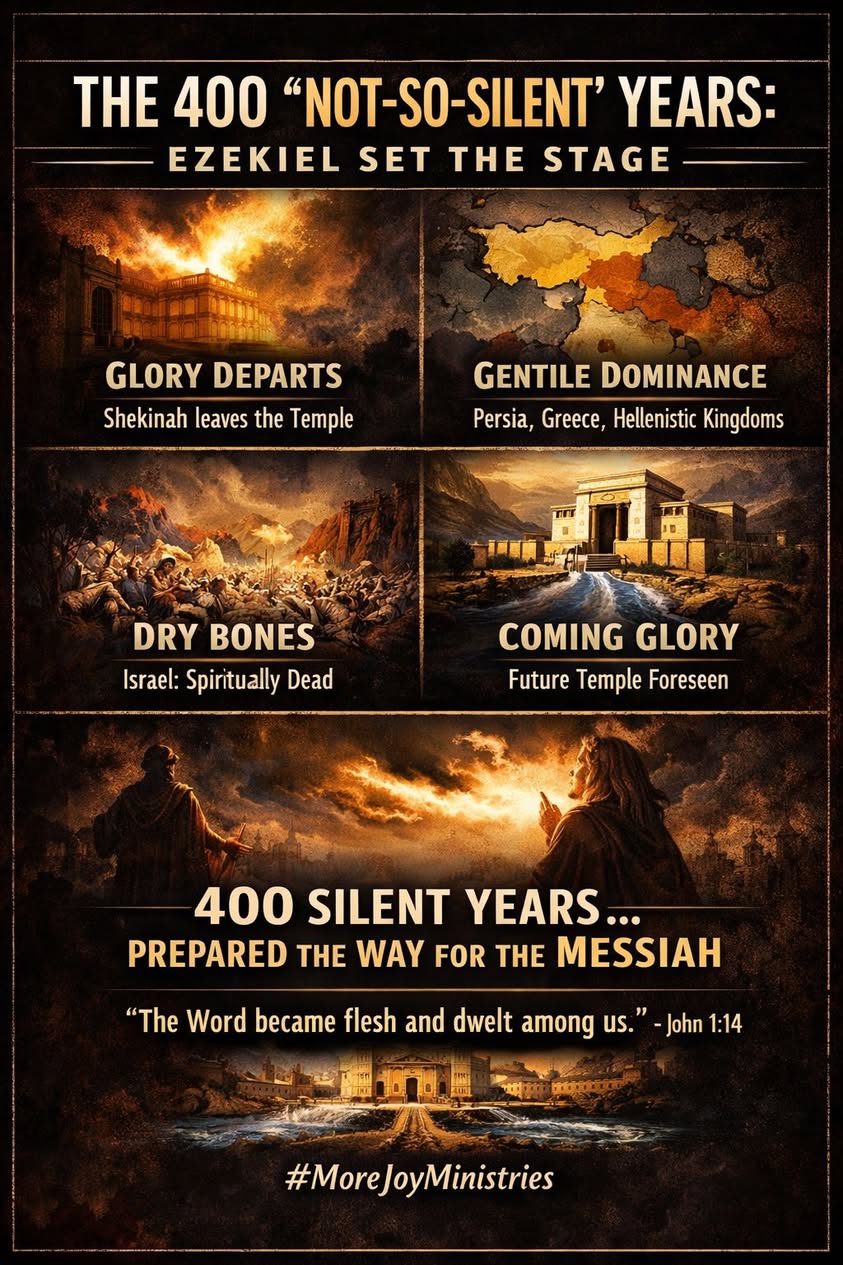
In Ezekiel 8–11, the prophet sees something devastating. The glory of the Lord departs from the Temple. The Shekinah presence that once filled the house in the days of Solomon leaves Jerusalem. That moment changes everything. From that point forward, Israel enters a prolonged season of discipline and foreign domination. The visible glory does not return to the Second Temple the way it once filled the first.
That departure sets the tone for what follows historically.
In Ezekiel 25-32, God pronounces judgment on surrounding nations. The message is clear: Israel will not operate as an independent theocratic power the way it did under David and Solomon. Gentile empires will dominate the region. And that is exactly what unfolds during the so-called silent years. Persia rules. Then Greece under Alexander. Then the fractured Hellenistic kingdoms, especially the Seleucids and Ptolemies. Eventually Rome steps in. Israel exists, but under Gentile authority.
Ezekiel does not name those empires the way Daniel does. But he establishes the reality that Israel’s national condition would involve foreign control until divine restoration.
Then comes Ezekiel 37, the valley of dry bones. God tells the prophet plainly: “These bones are the whole house of Israel.” This is a national picture. Structure without breath. Identity without vitality. During the intertestamental period, Israel has a temple. It has priests. It has synagogues scattered throughout the Mediterranean world. But there is no prophetic voice. No Shekinah glory filling the house. Spiritually structured… but dry.
Then John the Baptist appears in the wilderness. The breath begins to move again.
Finally, Ezekiel 40-48 closes the book with a vision of a future temple and restored glory. That temple does not match Zerubbabel’s. It does not match Herod’s renovation. It points forward. The Second Temple period was never the final restoration. It was a holding pattern.
And then something astonishing happens in the New Testament. The glory that departed in Ezekiel returns.. not as a cloud filling a building, but as a Person. “The Word became flesh and dwelt among us.” The true tabernacle walks back into Jerusalem.
So were the 400 years silent? Not at all. God was positioning empires, spreading a common Greek language across the known world, building Roman infrastructure, establishing synagogues in Gentile cities, all preparing the stage for Messiah.
Silence does not mean absence. It means preparation.
If you feel like you are in a silent season right now, don’t assume God is inactive. He may be laying foundations you cannot yet see. The same God who worked behind the scenes between the Testaments is still working when heaven seems quiet.
- @[61583539981347:2048:More Joy Ministries]
#MoreJoyMinistriesTHE 400 “NOT-SO-SILENT” YEARS, AND HOW EZEKIEL SET THE STAGE: People call the period between Malachi and Matthew the “400 silent years.” But history was not silent. Empires were rising. Nations were shifting. Israel was under foreign rule. The silence was prophetic. No new Scripture. No open vision. No national prophet speaking for God. So where does this fit in the Old Testament? Not in a direct timeline the way Daniel 11 lays out Persia, Greece, and the Seleucid conflicts in detail. But structurally and spiritually? The framework is already in the Book of Ezekiel. In Ezekiel 8–11, the prophet sees something devastating. The glory of the Lord departs from the Temple. The Shekinah presence that once filled the house in the days of Solomon leaves Jerusalem. That moment changes everything. From that point forward, Israel enters a prolonged season of discipline and foreign domination. The visible glory does not return to the Second Temple the way it once filled the first. That departure sets the tone for what follows historically. In Ezekiel 25-32, God pronounces judgment on surrounding nations. The message is clear: Israel will not operate as an independent theocratic power the way it did under David and Solomon. Gentile empires will dominate the region. And that is exactly what unfolds during the so-called silent years. Persia rules. Then Greece under Alexander. Then the fractured Hellenistic kingdoms, especially the Seleucids and Ptolemies. Eventually Rome steps in. Israel exists, but under Gentile authority. Ezekiel does not name those empires the way Daniel does. But he esta